


近日,Polymaker 的 FGF/LFAM 业务发展经理 Deborah Claxton 拜访了我们的合作伙伴 克劳斯玛菲 (Krauss Maffei) ),深入了解 powerPrint 系统及其如何应用颗粒材料。拥有近 190 年历史的克劳斯玛菲,是全球领先的塑料和橡胶生产加工机械设备制造商。该公司始终走在创新前沿,专注于注塑成型、挤出和反应加工等技术领域。如今,克劳斯玛菲正通过整合新型增材制造解决方案,进一步提升其产品实力。
PowerPrint 系统:革新大型 3D 打印
powerPrint系统标志着克劳斯玛菲在增材制造领域迈出了重要一步。这款基于龙门架的大型3D打印机经过精心设计,可实现高质量、可重复的生产,并解决了行业中长期存在的翘曲和粘附失败等难题。
主要特点:
先进的挤出技术:powerPrint系统的核心在于其专门设计的挤出单元。该单元采用更长的螺杆长度以实现均匀熔融,可精确控制材料流速和温度,从而确保打印效果始终如一且质量上乘。
热管理:系统配备隔热外壳和加热打印平台,最大限度地降低了翘曲和粘附问题的风险。
工艺稳定性:凭借先进的温度控制和优化的材料流速,该系统即使在苛刻的工业应用中,也能保证多次生产运行中结果的一致性。
Polymaker粒料的应用案例
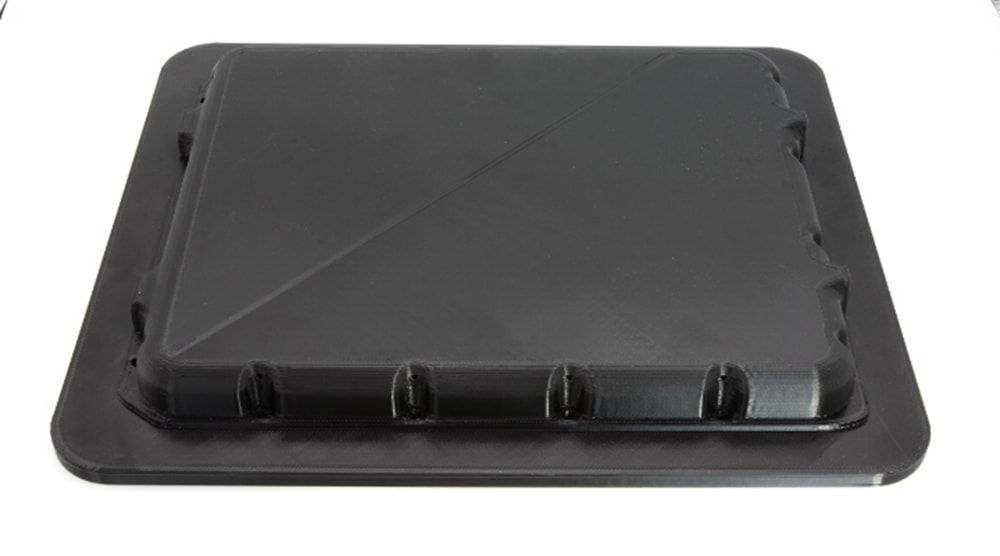
为了充分展示该系统的卓越性能,克劳斯玛菲与 Polymaker 合作,生产了一款应用于汽车和家电行业的薄壁部件。该部件使用 PolyCore™ ABS-5022 (20% 碳纤维增强 ABS 复合颗粒)打印而成。这种碳纤维增强材料具有更高的刚性、强度以及在压力下的抗变形能力。 此次合作凸显了 powerPrint 系统在保持高机械完整性的同时,实现快速降本生产的能力。通过支持多个部件同时打印并结合精密后处理,克劳斯玛菲展示了其优化工作流程、显著缩短交付周期的实力。使用 PolyCore™ ABS-5022 缩短了单层打印时间,实现了更低成本的生产,产品的力学性能也与传统制造方法相当。

案例详情:
重量: 0,543 Kg
尺寸: 520 x 310 x 4,5 mm
打印系统: Krauss Maffei powerPrint
打印方: KraussMaffei Technologies GmbH
打印材料: PolyCore™ ABS-5022

“采用 Polycore™ ABS-5022 使我们能够高效生产高质量的大尺寸部件,显著缩短单层时间并降低成本。其材料特性与传统制造方法(如注塑成型)非常接近,使其成为汽车和家电应用的理想选择。此案例充分证明了增材制造技术如何能够自信地从原型制作迈向预量产阶段。” —— 迈克尔·赫尔内德 (Michael Helneder),克劳斯玛菲客户负责人
展望未来:持续创新
克劳斯玛菲在增材制造领域的愿景,延伸至推出基于工业机器人的新型系统。该系统将于 2025 年在巴黎 JEC 复合材料展上首次亮相,它将实现多维度打印,为复杂几何形状和非平面设计开辟新的可能性。通过将数据追踪和先进聚合物材料融入其解决方案,克劳斯玛菲持续为行业设立质量和效率的新标杆。
该公司与 Polymaker 在 TCT Asia 2025 等展会上的持续合作,进一步彰显了其致力于通过创新协作应对行业挑战的决心。
结语
克劳斯玛菲凭借 powerPrint 系统进军增材制造领域,充分展现了其对创新和行业领导力的承诺。通过融合尖端技术、以客户为中心的服务以及战略合作伙伴关系,克劳斯玛菲已做好充分准备,引领大规模增材制造的未来发展。
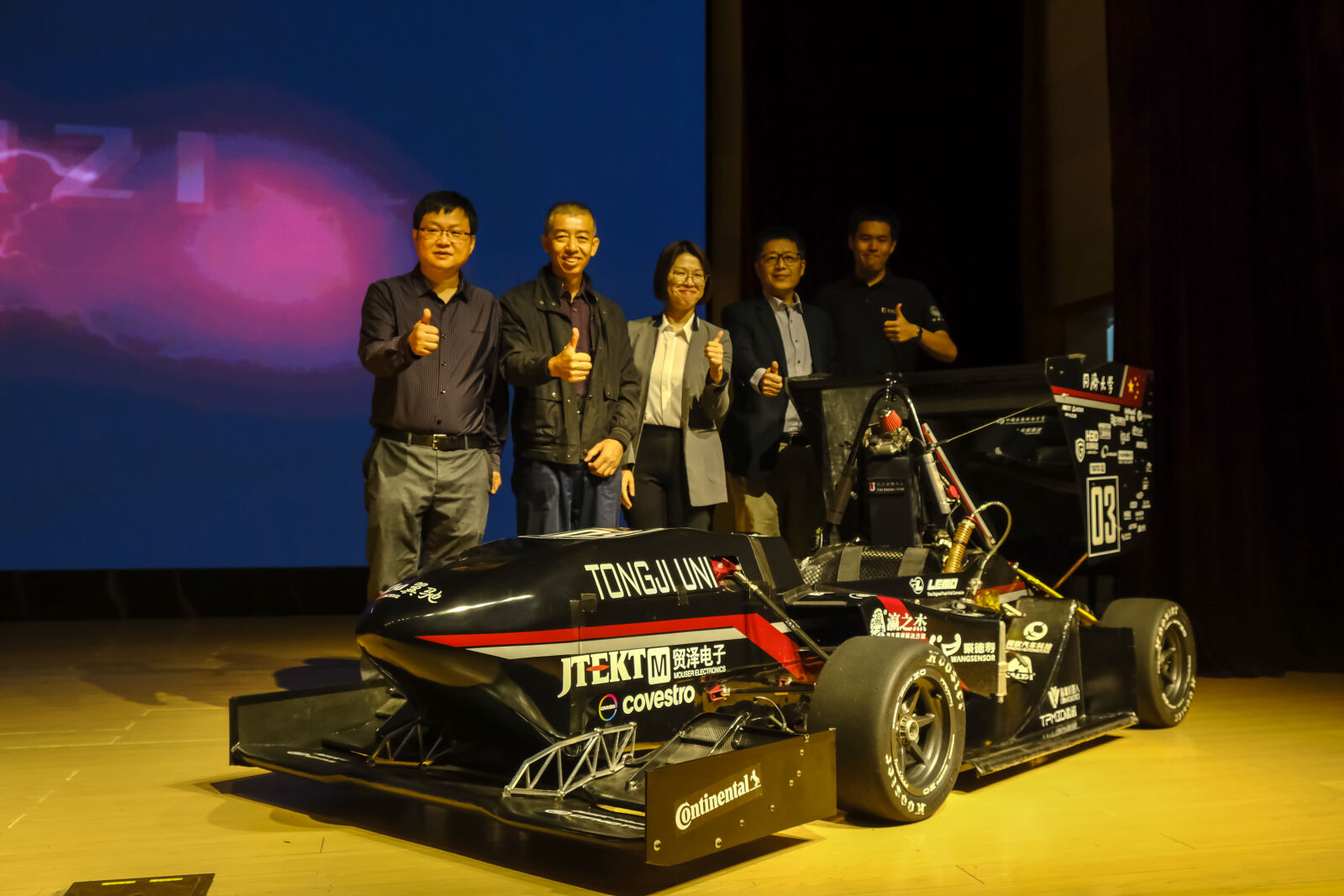
The TJU Racing Team(Tongji University Racing Team) successfully announced their new racing car model, the TR21, at the 2021 New Car Model Public Announcement on October 12, 2021, in the 101 Lecture Hall of Jiren Building, Jiading Campus.
Polymaker participated in the event as one of the sponsors, and Cui Yue, a professional racer in the Porsche Carrera Cup Asia, was invited to drive the TR21.
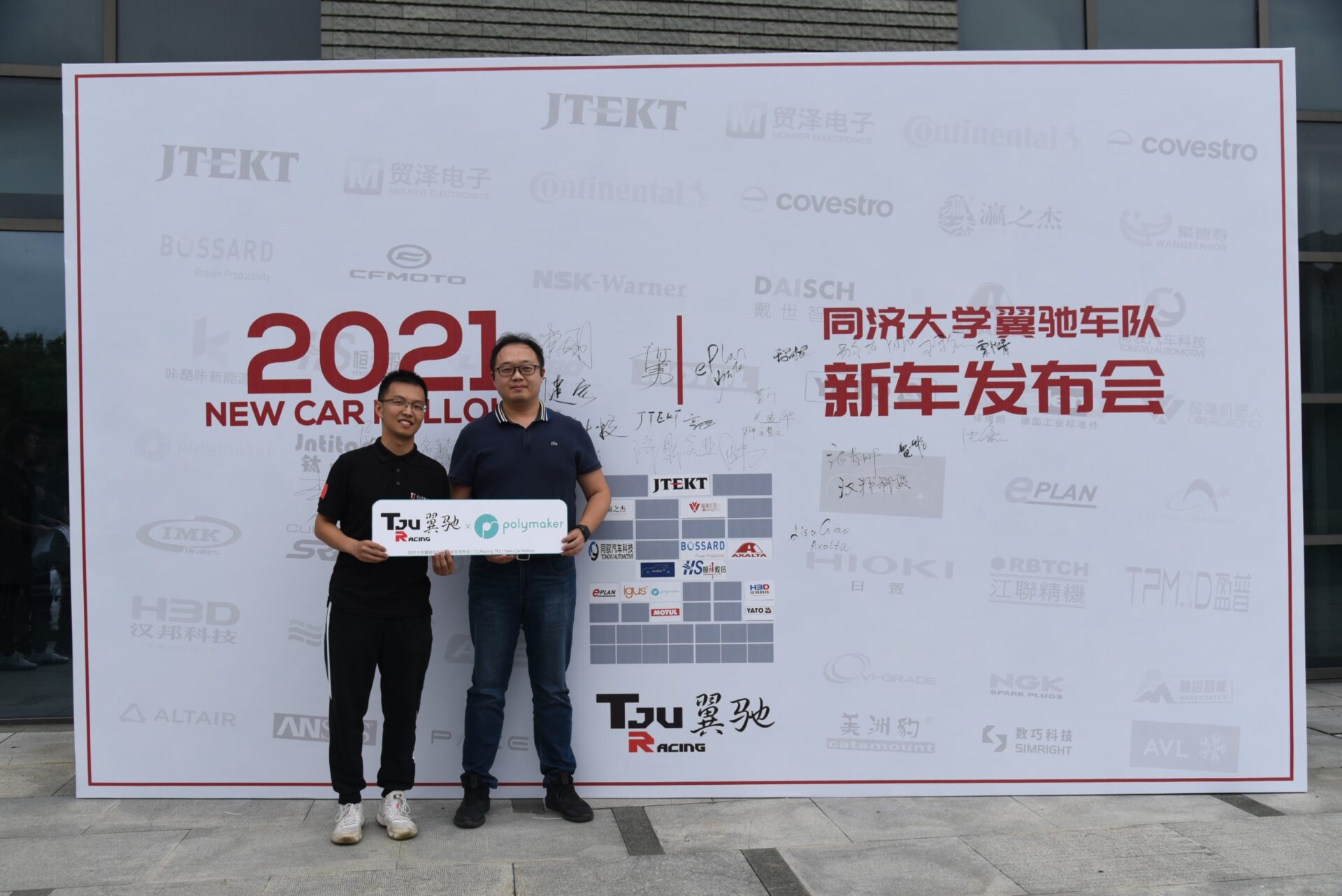
Picture 1 | Polymaker Attended the 2021 New Car Model Public Announcement of TJU Racing Team
The TR21 is the 14th racing car independently designed and manufactured by the TJU Racing Team. The new model achieves significant innovations over previous models, oftentimes by using Polymaker’s 3D printing materials.
Picture 2 | Picture Stripes of TR21 Public Announcement
Strong Power Core
With the Triumph 675 3-cylinder engine as its power core, the TR21 uses a dry lubrication system, dual-cycle cooling system, and a more stable fuel supply system. The model is also equipped with a pure titanium exhaust muffler and hollow titanium alloy half-axles to reduce weight more efficiently. Having the power core and newly developed variable intake system work together heightens the performance of each part even further.
New Body Structure
The TR21 adopts the body structure of a full monocoque, replacing the former structure of a mono-frame. The carbon fiber layer, aluminum honeycomb panels, and PMI foam are used to provide higher strength and torsional stiffness while also keeping the body lightweight to ensure ideal weight distribution. Key parts of the body, like monocoque inserts and aerodynamic wing ribs, use PolyMide™ CoPA from Polymaker as the base material to give the parts structural stiffness.
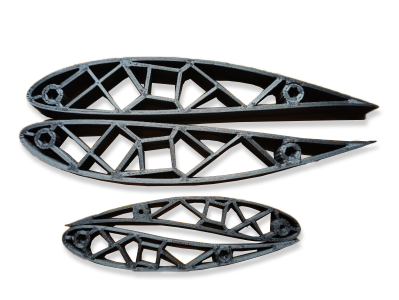 Picture 3 | 3D-printed Front Wing Rib using PolyMide™ CoPA
The PolyMide™ product series are 3D printing filaments developed from Nylon. By adopting Polymaker’s patented Warp-Free™ technology, PolyMide™ products not only have the same engineering performance as typical Nylon materials but are also easy to print with a minimum size limit. PolyMide™ CoPA was developed from a copolymer of Nylon-6 and Nylon-6,6, a material with balanced mechanical strength and toughness. Along with the good printability, this material gives dimensional stability with its temperature resistance up to 180˚C, making PolyMide™ CoPA an ideal material for parts like gears, engine mounts, pipe connectors, and high-speed airflow pipes that are used in harsh environments.
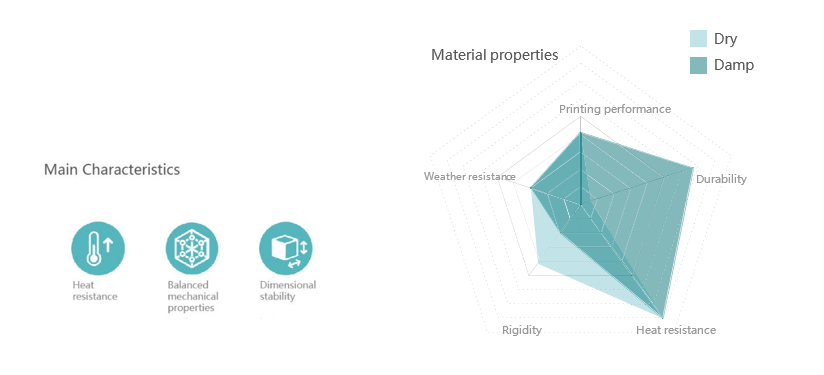
Picture 4 | Main Characteristics and Material Properties of PolyMide™ CoPA
Innovative Aerodynamic Devices Design
The upgraded body and aerodynamic devices of the TR21 are some of its biggest highlights. Aerodynamics, which dominates the car’s design, has always been the ultimate goal for the TJU Racing Team. After observing systematic design processes and multiphysics simulations, the new aerodynamic devices is able to reach a down force of up to 1075N at the speed of 20m/s, improving the car’s external flow and aerodynamic sensitivity while significantly enhancing its curve speed. The flow deflector in the aerodynamic devices was 3D printed using Polymaker’s PolyMax™ PC material. Not only did the 3D printing material increase the car’s aerodynamic performance, but it also greatly reduced the cost and hours required to produce the flow deflector, with the only sacrifice being structural weight.
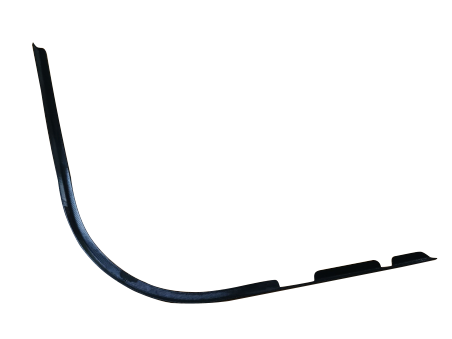
Picture 5 | 3D-printed Tail Deflector Using Polymaker PolyMax™ PC
The PolyMax™ product series are advanced 3D printing filaments produced by Polymaker’s patented Nano-Reinforcement technology, all of which have excellent mechanical properties and printing quality. PolyMax™ PC is a high-performance, polycarbonate-based filament boasting strength, toughness, heat resistance, and printing quality, lending itself to engineering applications, specifically when higher resistance for impact and vibration is needed, like in fixtures and fixing tools, furniture, small motor mounts, UAV, 3D printer parts, etc.
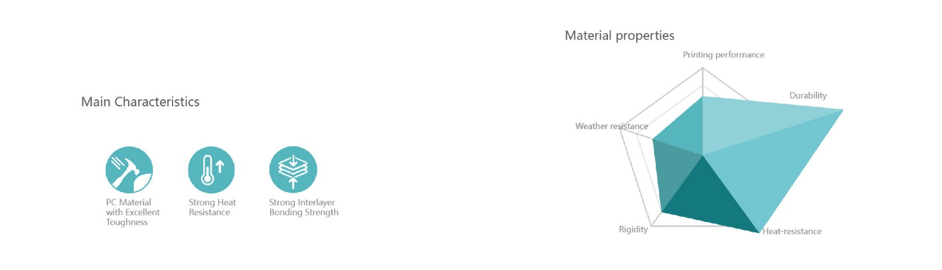
Picture 6 | Main Characteristics and Material Properties of PolyMax™ PC
Polymaker’s Polysmooth™ has also been used to print the front flap variable section, wing, and suspension lug cover for the TR21. Using alcohol-polishing in the materials’ post-processing allows the external flow of the whole vehicle to be optimized.
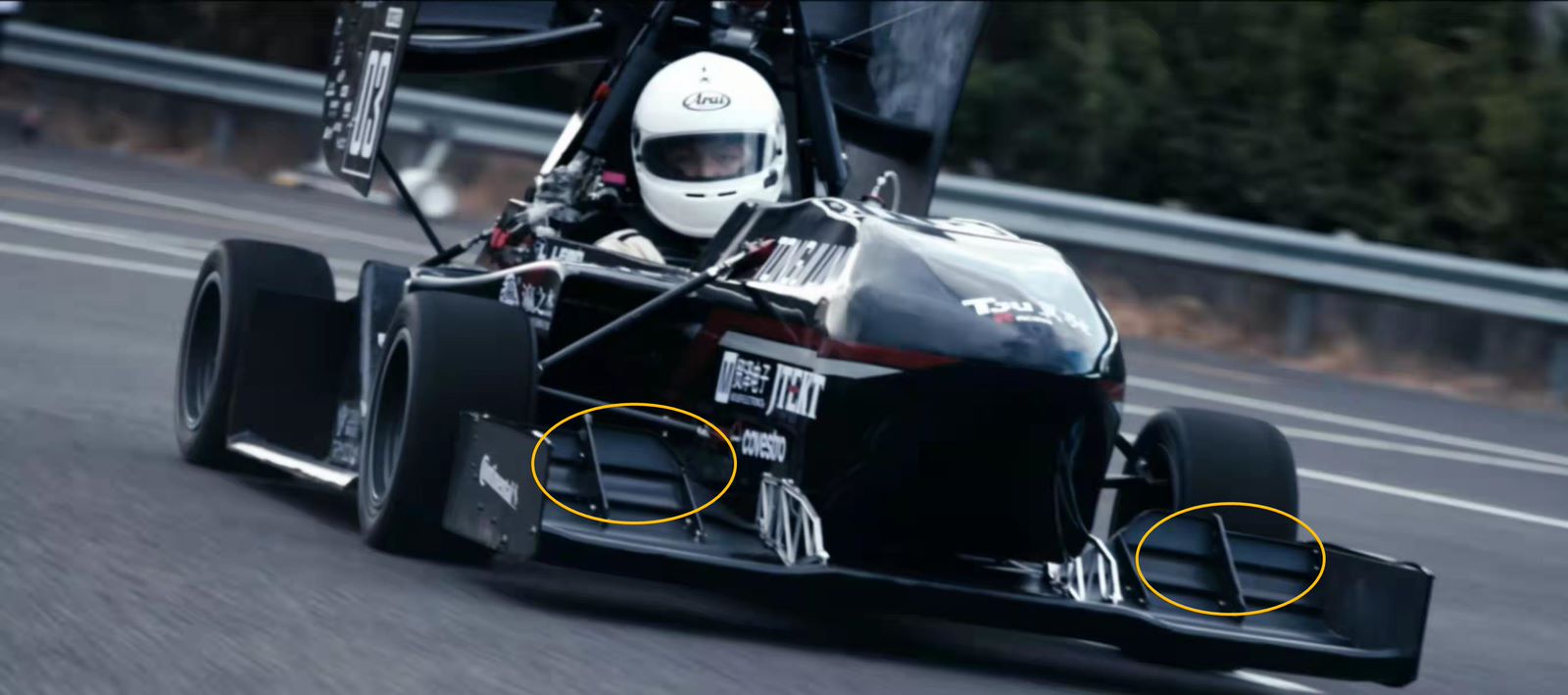
Picture 7 | 3D-printed Front Flap Using Polymaker’s PolySmooth™
PolySmooth™ is a unique and easy-to-print filament, specially designed for "freeing both hands" in post-processing. After printing with this material, Polysher™ is then applied to create a smooth surface. PolySmooth™ helps models that are difficult to polish be post-processed into a smooth surface, like statuettes or role-playing props, making PolySmooth™ optimal for product design and prototype creation as it produces a result similar to injection molding.
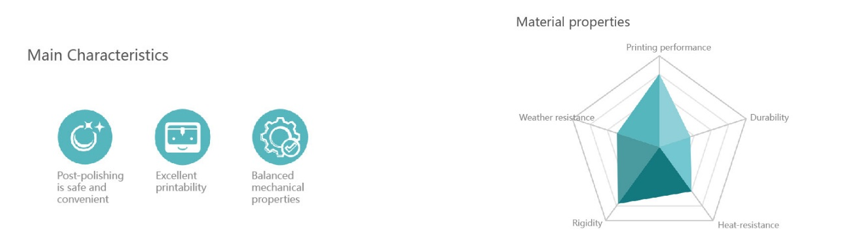
Picture 8 | Main Characteristics and Material Properties of PolySmooth ™
Brand New Chassis System
After a detailed analysis of tire characteristics, the original tires were replaced with Hoosier 16” high-performance racing slick tires. To match this tire, a new chassis system was designed for the TR21, equipped with a brake-by-wire stabilizing system to improve the vehicle’s dynamic performance.
Upgraded Electronic Control System
The TR21 continues to develop its electronic control system, using professional MoTeC ECU to have accurate control of the electronic throttle, pneumatic shift, and variable intake manifold while supporting wireless data acquisition. Also, the new steering wheel controller integrates radio communication, clutch-by-wire, brake-by-wire stability, ejection start control, traction control, and adjustment functions for various strategies, allowing drivers to enjoy its unlimited potential.
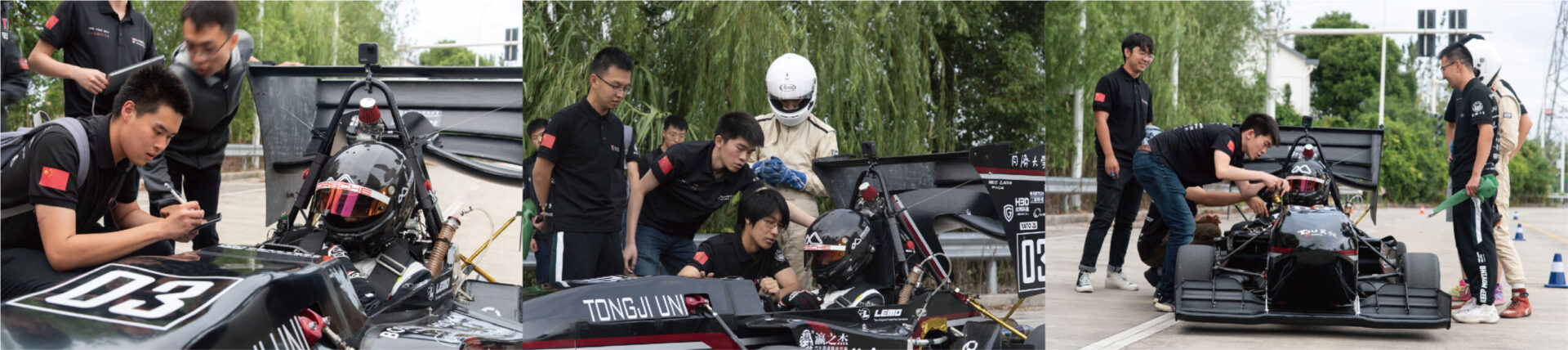
Picture 9 | TR21 Public Announcement Picture Groups
At this event, the TJU Racing Team announced their driverless vehicle plan for the first time, and they hope to see driverless technologies used in the next generation of TJU racing cars when they compete in the University Formula Race.
Polymaker has been actively involved in developing applications of 3D printing technology in the automotive and racing industry. Applying 3D printing materials allows for reduced costs, shortened production cycles, personalized customization, and lightweight parts to a certain extent. The diversity of Polymaker’s filaments also makes crafting different racing car parts more feasible, pushing the application of industrial-grade filament to be even more common. Polymaker's industrial-grade products include reinforced materials based on nylon mixed with carbon fibers and glass fibers, which improves their thermal properties and stiffness for interlayer bonding strength. There are also PC high fire-retardant materials and polymer alloy materials, both of which have high heat resistance and toughness.
We hope that 3D printing technology will be used widely when manufacturing and producing cars and racing cars in the near future.

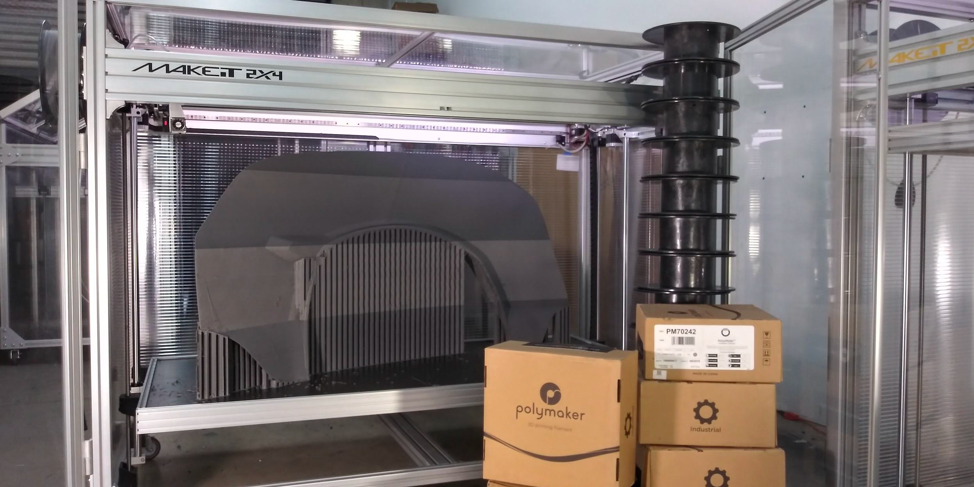
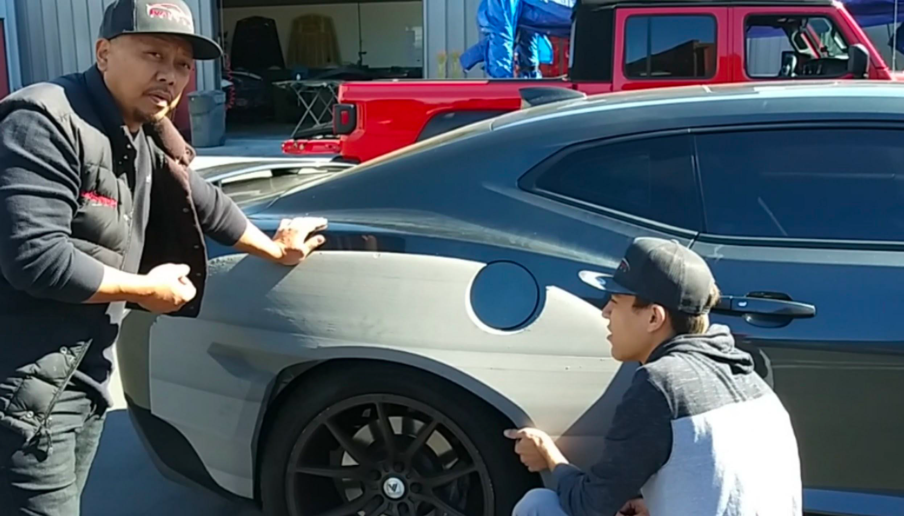
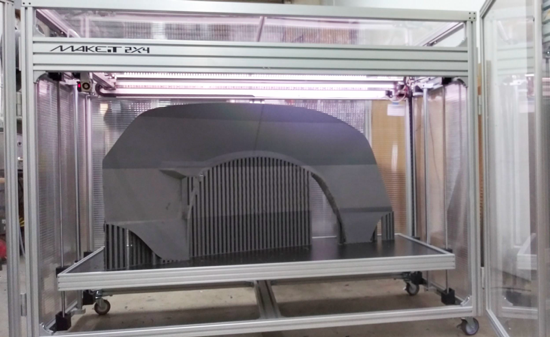
Full size fender plug (1346mm x 660mm) 3D printed on MAKEiT2x4 Large Format 3D printer using PolyMide™ PA6-GF material made by Polymaker.
MAKEiT2x4 is a large format 3D printer able to print an entire quarter panel in one piece with industrial quality filament PolyMide™ PA6- GF from Polymaker. MAKEiT2x4 is designed and made by MAKEiT, Inc. in California.
The printer is equipped with a massive rectangular printing area of 1400x605x800mm and a powerful printhead, this makes it the premier choice for printing large automotive parts, like rectangular-shaped body models. In fact, it is recognized by the automotive aftermarket authority SEMA, the Specialty Equipment Market Association. The SEMA Show 2020 awarded our MAKEiT2x4 large format 3D printer the 2nd Best New Tool and Equipment Product.
With the printer MAKEiT 2x4 car designers and fabricators can print the original fender design, in full instead of different pieces welded together saving the time and energy spent to complete a puzzling process. It counts with an application where you can see the part being 3D printed in real time.
After days of continuous printing, when the model is finally printed and cleaned, you can test fit it right away onto the vehicle. The well tested piece can be used as a plug to make the production mold. Plus, by using the MAKEiT2x4 machine, you can keep all your original designs in house.
Due to the complex nature of making a perfectly smooth body plug, the material used to make the plug needs to be stiff and strong and able to withstand intense heat. After many trials of different kinds of filaments, we have narrowed it down to a couple filaments. Polymaker™ PA6-GF meets all the material requirements for 3D printing a good plug.
With the help of 3D scanning, computer-aided design, 3D printing and the right material, our clients are no longer sculpting clay plugs by hand. They especially love the 3D printing digital mirroring process. With a single click, a mirrored model can be printed automatically. In comparison, making opposite-side plugs perfectly symmetrical by hand is virtually impossible.
We’d like to share the following case study from one of with you from our amazing customers.

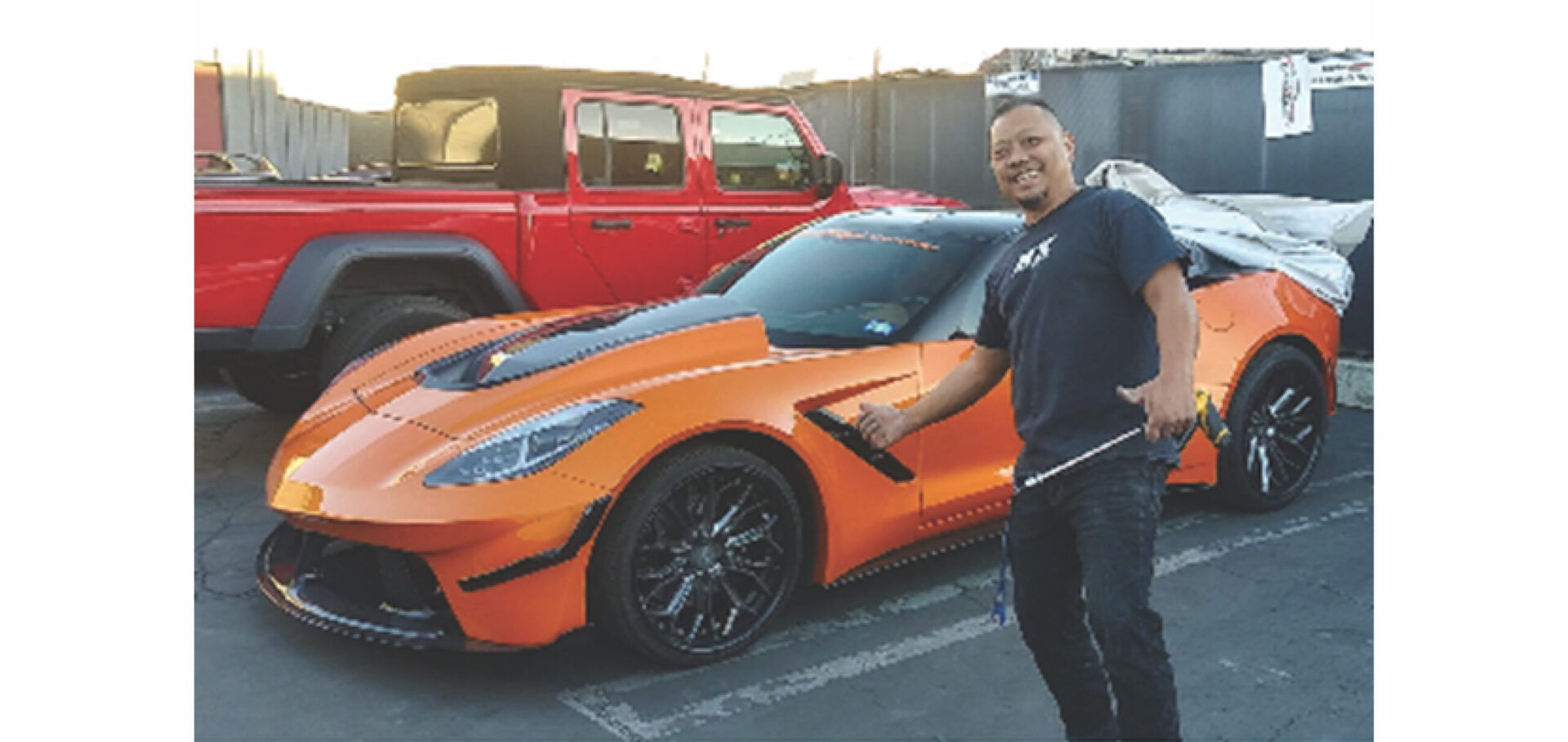
Ivan Tampi, owner of Ivan Tampi Customs, is an award-winning designer and fabricator specializing in widebody Corvette customization. He used to spend weeks making plugs by hand. With the help of MAKEiT2x4's large-format 3D printing technology, he is able to get 3D printed prototypes from the CAD design, without the need for additional tooling. He is now able to do more design work, build more exotic wide body kits faster, all at a lower cost.

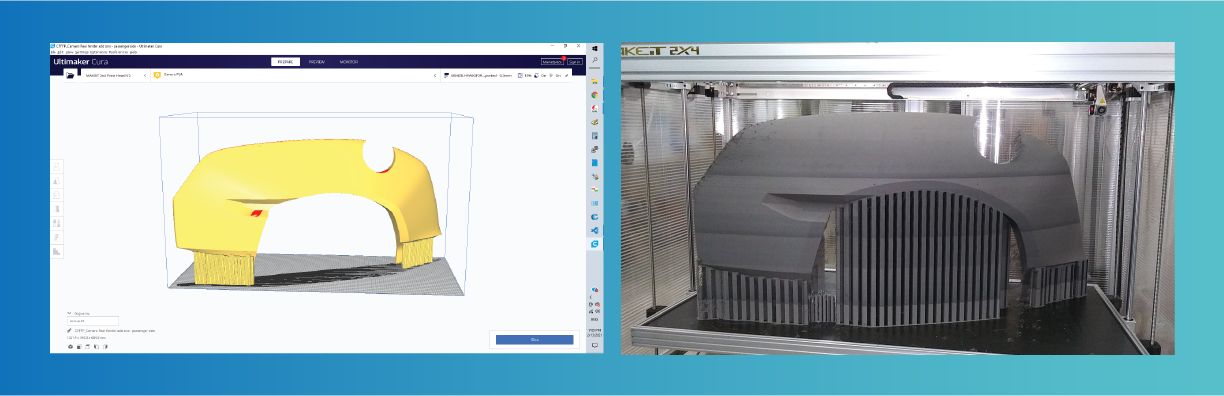
A full-size passenger side rear fender cap is 3D printed on a heated carbon fiber print bed. This bed provides a massive 1400x605x800mm print envelope. The 0.6mm tungsten carbide nozzle on the powerful printer works wonders with the PA6-GF, producing 5 days of non-stop work, (except for the automatic pausing of the printer when the filament runs out). An innovative filament motion sensor detects filament exhaustion and other problems. Once a new roll of PA6-GF is installed, the printer will continue. By nature, PA6-GF is an abrasive and stiff filament. It needs a printing temperature in the range of 285C to 300C and an abrasion resistant nozzle to extrude well. Often, 3D printer bed leveling and calibration can be complicated and time consuming. But this is not the case with the MAKEiT2x4 printer. It has 100% automatic print bed leveling and calibration. The user only has to press a few buttons on the computer screen. The rest is done by the printer itself.
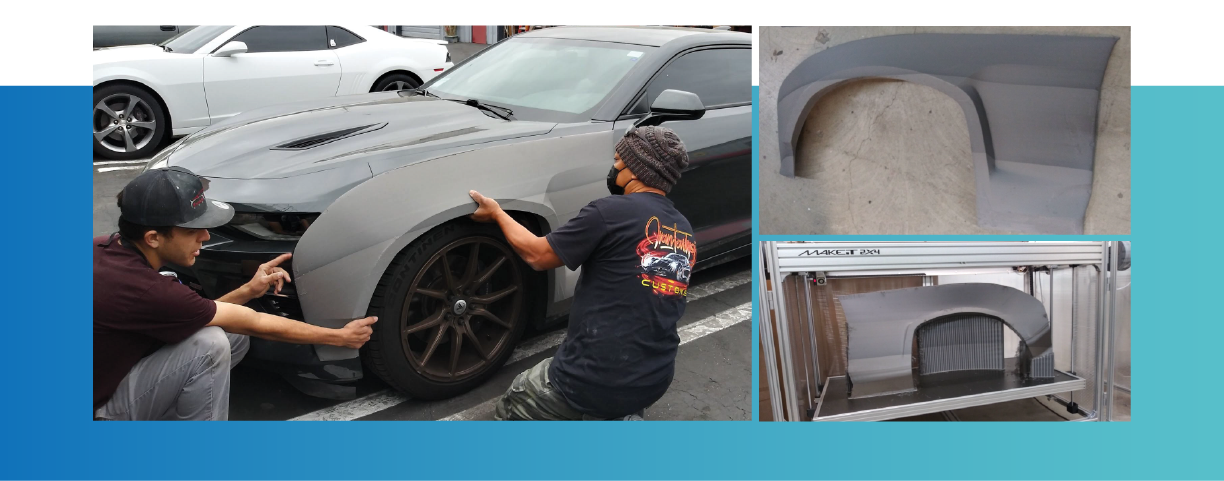
(3D Printed passenger side rear fender plug fitment test by Ivan Tampi Customs)
By using the digital mirroring process, the driver side rear fender is obtainable. This simple process creates a symmetrical model, and it can be 3D printed right away. The finished print is shown here.
Once the printing starts, we want it to be finished as planned, right? No one wants to see an incomplete
job. However, a random layer shift during printing poses serious risk. It can ruin the entire print. Many 3D printer users have encountered similar issues. It is very costly when printing a large size part. To prevent the "lay-shift", we have implemented the LSP (Lay Shift Prevention) in each 2x4 printer as a standard feature, ensuring reliable printing, job after job. A video clip about LSP can be found here ( https://drive.google.com/file/d/1FW9CdxKvBCXWwAC22lJqaLcFv5UnEByM/view )
A driver-side front fender plug is completed after 7 days of printing. As noted, there is support material and debris attached to the fender print. These can be easily removed before the fitment test.
After an initial fitting, the fender plug will be power sanded to make it as smooth as possible. During sanding, the nylon glass fiber print remains stable, unlike PLA. It doesn’t gum or melt at all! This is huge. The old headache of “how do I sand it” has become “I love it. I can sand it easily, as many times as I want.” Often, regular post processing filler materials like Bondo are applied onto the plug before next sanding.
While the printer is running on its own, a MAKEiT2x4 user can monitor the printing process, and control the printer remotely using a smartphone. When you visit your customer, you can show their part being 3D printed in real time!
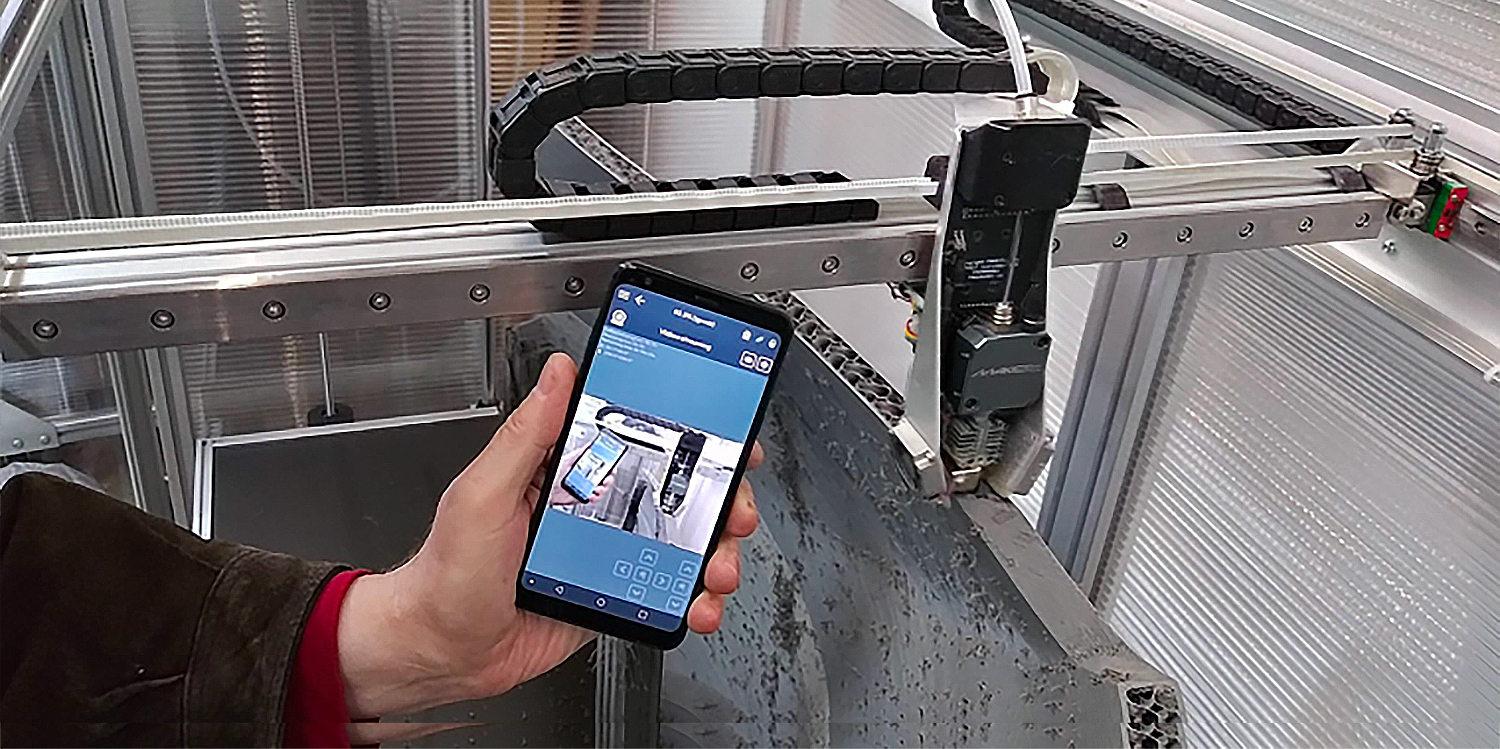

According to Ivan, MAKEiT 3D printing technology has saved his company 75% of time and labor compared with their traditional plug-making process. 3D printing also ensures every part is symmetrical and keeps the harmonious proportion all the way through. Compared with other filaments earlier, PolyMide™ PA6-GF has become Ivan’s only go-to material. Nowadays Ivan Tampi Customs is able to turn their unique digital designs into real functional parts in days and weeks, and no extra tooling is involved.
Ivan’s beautiful widebody exotic cars can be found at:
Instagram: @custom_car_builder; @ivantampicustoms
Website: www.ivantampicustoms.com
MAKEiT2x4 Large Format 3D Printer is designed and built in California USA by MAKEiT, Inc.
Website: www.makeit-3d.com
Instagram: @largeformat3dprinter
Email: shelley@makeit-3d.com for purchase and resale opportunity
Sarolea is a revived Belgian motorcycle manufacturer that took on the historic Sarolea brand after the original company ceased production in the 1960’s. The revived brand now focuses solely on electric powered motorcycles, but at the heart of the company is the same passion of motorcycles that founded the original brand back in 1850.
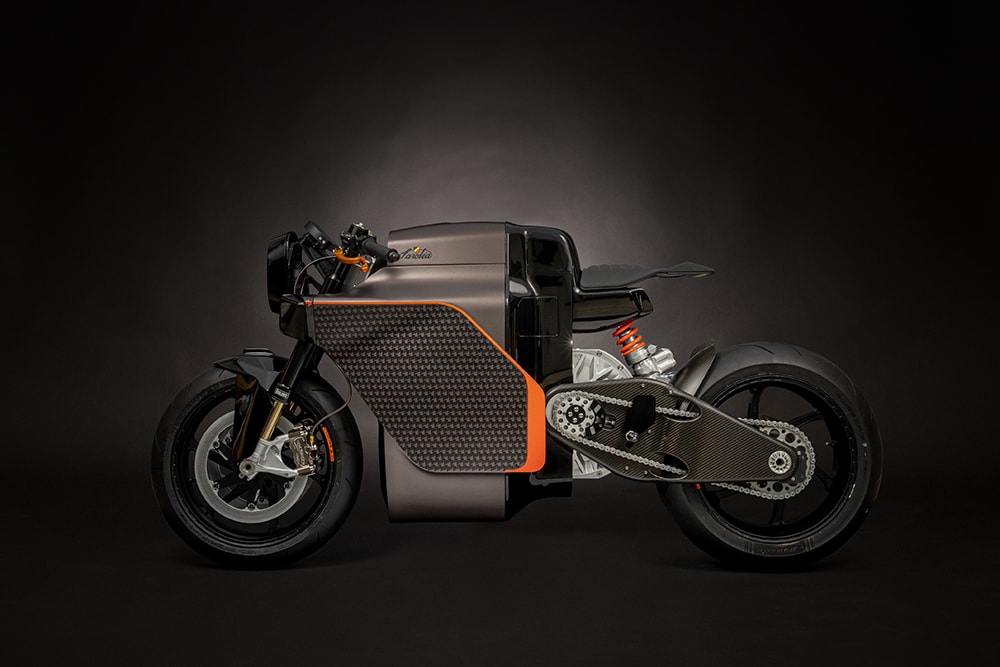
Sarolea develop and manufacture their motorcycles from the ground up using in house technologies originally developed for track racing bikes. After gaining popularity of their designs on the race track, Sarolea decided to design a road going version of their first race bike the Manx 7. Sarolea have been using 3D printing technology at each stage of their production process and have established close technical relationship with Polymaker.
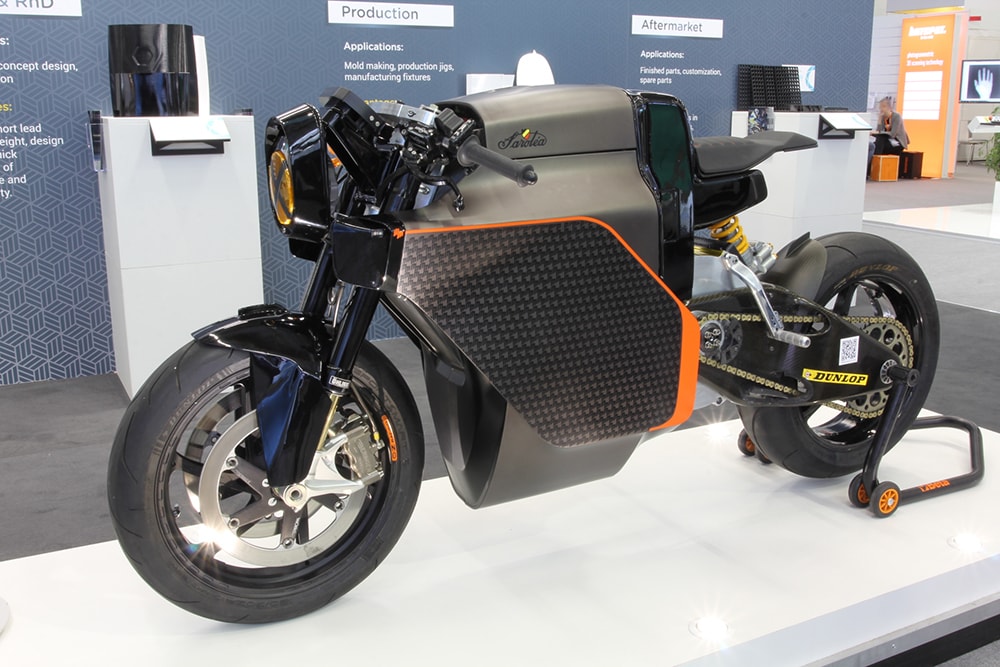
3D printing technology can bring huge advantages to the automotive industry in all aspects. Sarolea has integrated 3D printing into every stage of their production cycle, utilizing many different materials and their unique properties in the design, production and ultimately for the manufacture of parts that operate on the road and race bikes.
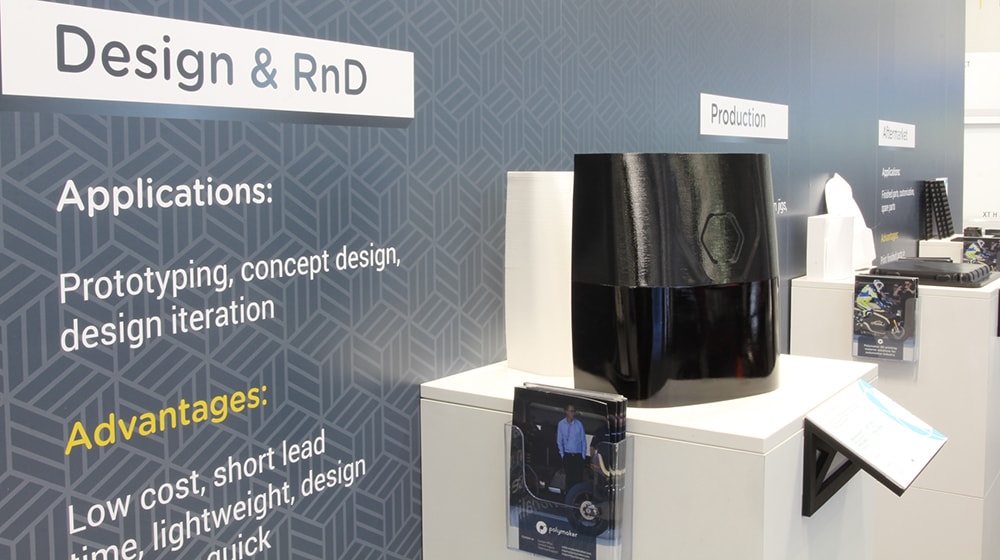
Stage 1: Design & RnD
Applications: Prototyping, concept design, design iteration
Advantages: low cost, short lead time, lightweight, design freedom, quick verification of appearance and functionality.
Description:
Both PolyMax ™ PLA and PolyMax ™ PETG are used for prototyping. For the Manx 7 electric superbike, the entire bodywork was prototyped using PolyMax ™ PLA. The printability, reliability and toughness play a role in this application. On the N60 model, Sarolea used PolyMax ™ PETG for bodywork prototyping. Compared to PolyMax ™ PLA, PolyMax ™ PETG is easier to sand and polish, offering an additional 20°C heat resistance compared to PLA. This allowed Sarolea to print and test body work with a professional finish.
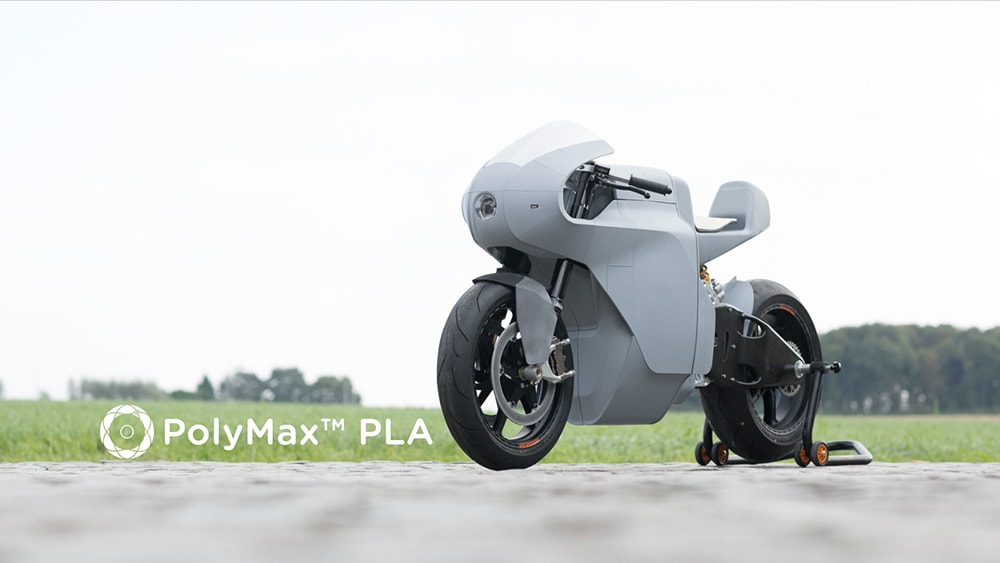
PolyMax ™ PLA for bodywork prototyping
PolyMax ™ PETG for bodywork prototyping
Stage 2: Production
Application: mould making, production jigs, manufacturing fixtures
Advantages: fast and low-cost manufacturing of specific tools for custom parts, effectively reduce production cycle by printing in house. Print negative moulds for direct carbon fibre lay-up.
Description:
Sarolea are 3D printing moulds in PolyMide™ CoPA which they are using to produce final parts in carbon fibre. Both the Manx 7 and N60 have a carbon fiber monocoque chasis, this requires a number of intricate moulds that help with the lay up of the carbon fibre. PolyMide™ CoPA can withstand the high heat and pressures involved in vacuum curing process while the carbon fiber is baked in the autoclave. PolyMax™ PETG is also widely used to make production tools, jigs and fixtures necessary when assembling the bikes.
PolyMide™ CoPA mould
Stage 3: Aftermarket
Application: Printing production ready parts, customization and spare parts
Advantages: Print finished parts in advanced materials, provide full customization to customers on existing parts, keep digital database of spare parts.
Description:
Sarolea features a number of 3D printed parts in final production thanks to the advanced materials that Polymaker offer. PolyMide™ PA6-CF is used widely in the high velocity air flows and Polymaker™ PC-PBT in use as a cell holder within the custom-made batteries. PolyMax™ PC-FR offers a fire rated material to print fixtures and holdings for the many high voltage circuits and wires that are necessary to run the bike.
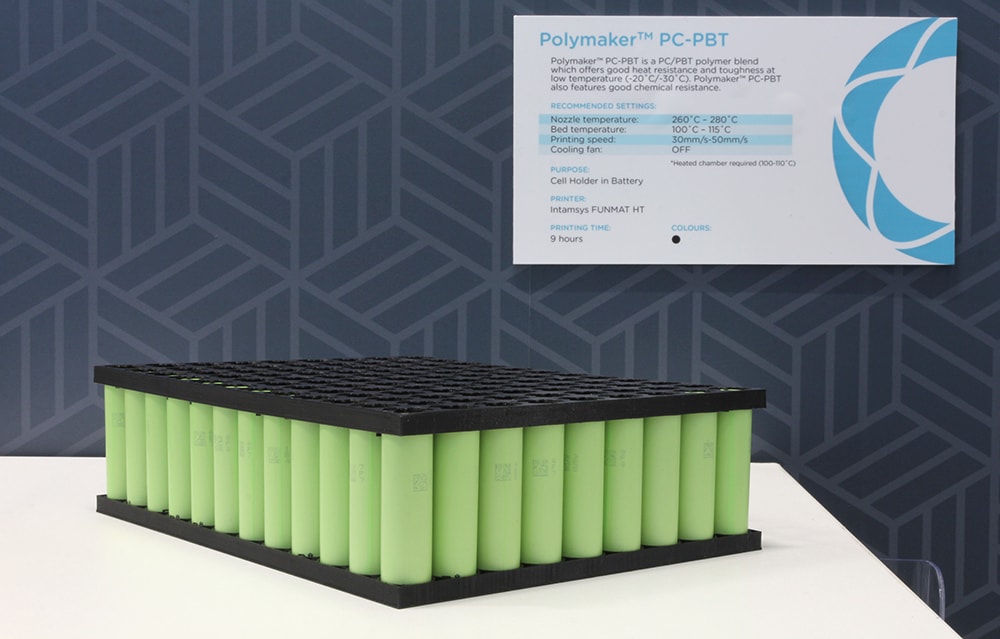 Polymaker™ PC-PBT cell holder
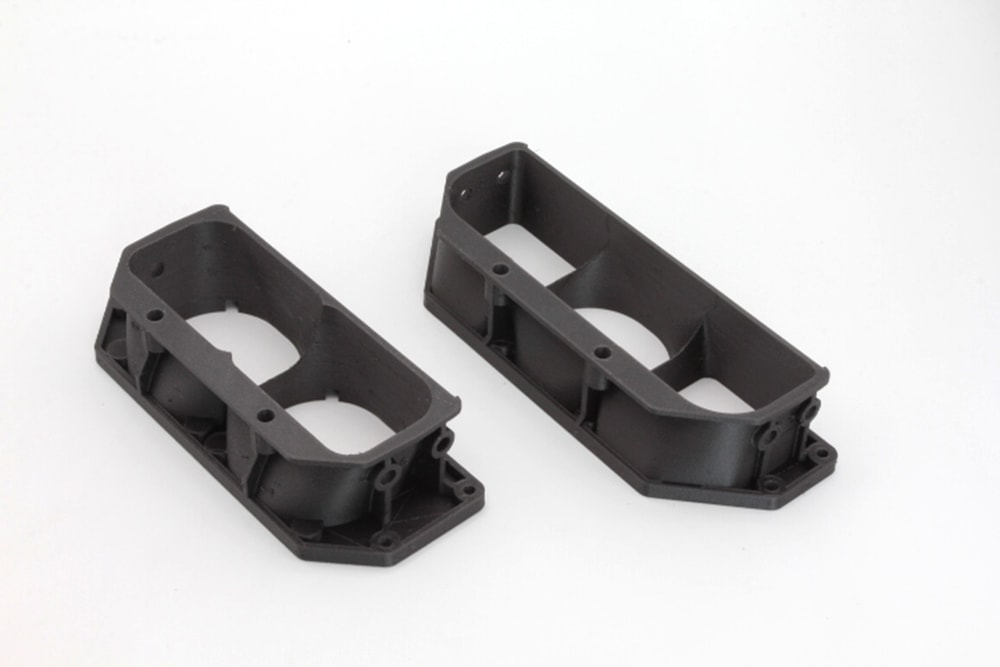 PolyMide™ PA6-CF air duct
Sarolea has found that Polymaker materials are an invaluable tool not only in prototyping but also in the manufacturing and final production of parts for their motorbikes. The technical partnership between the two companies allows Sarolea to push the boundaries of vehicle electrification.
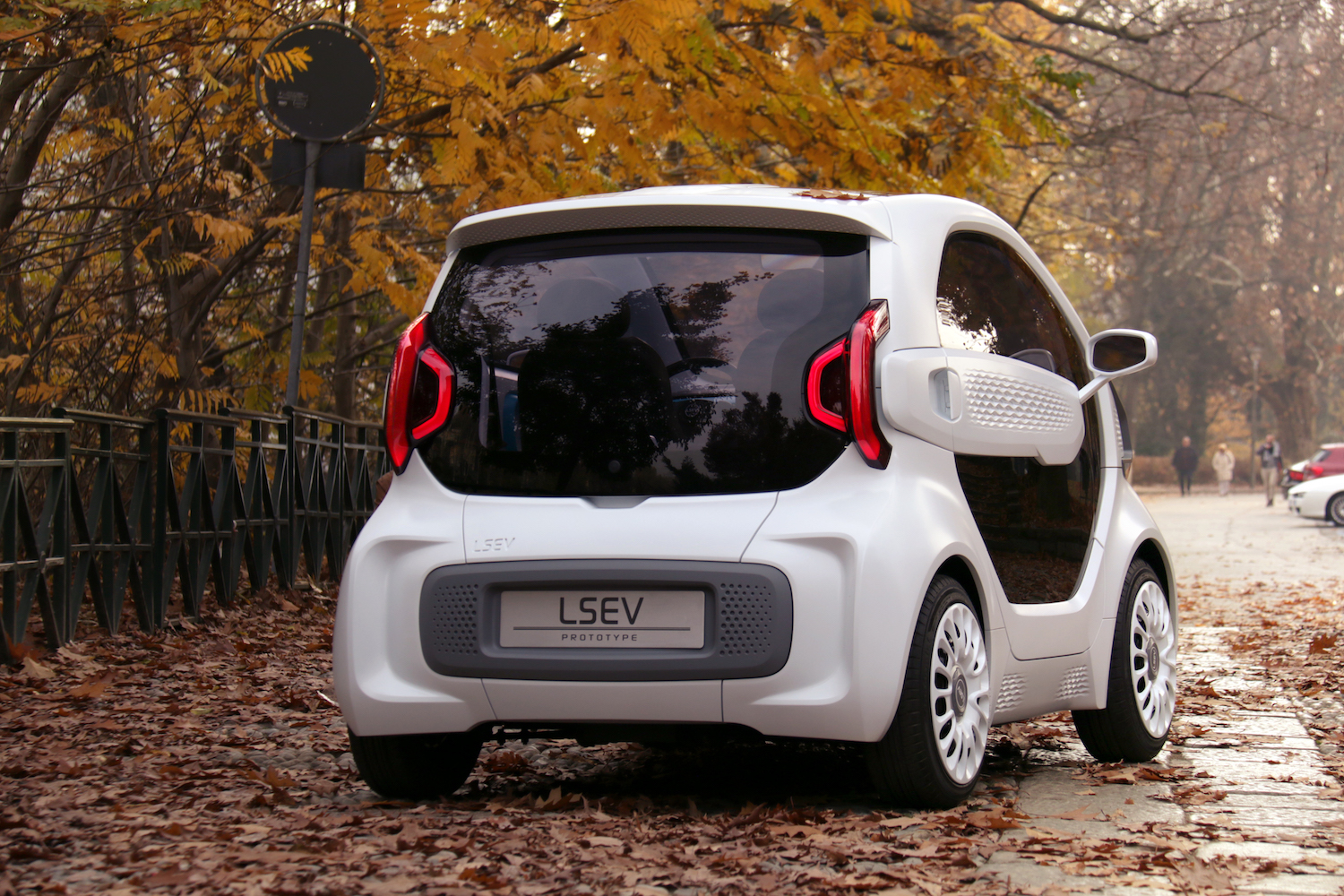
Italian electric car company XEV and 3D printing material company Polymaker organized a joint press conference at the China 3D-Printing Cultural Museum in Shanghai. The first mass-producible 3D-printed electric car in the world was launched and shown to the public.
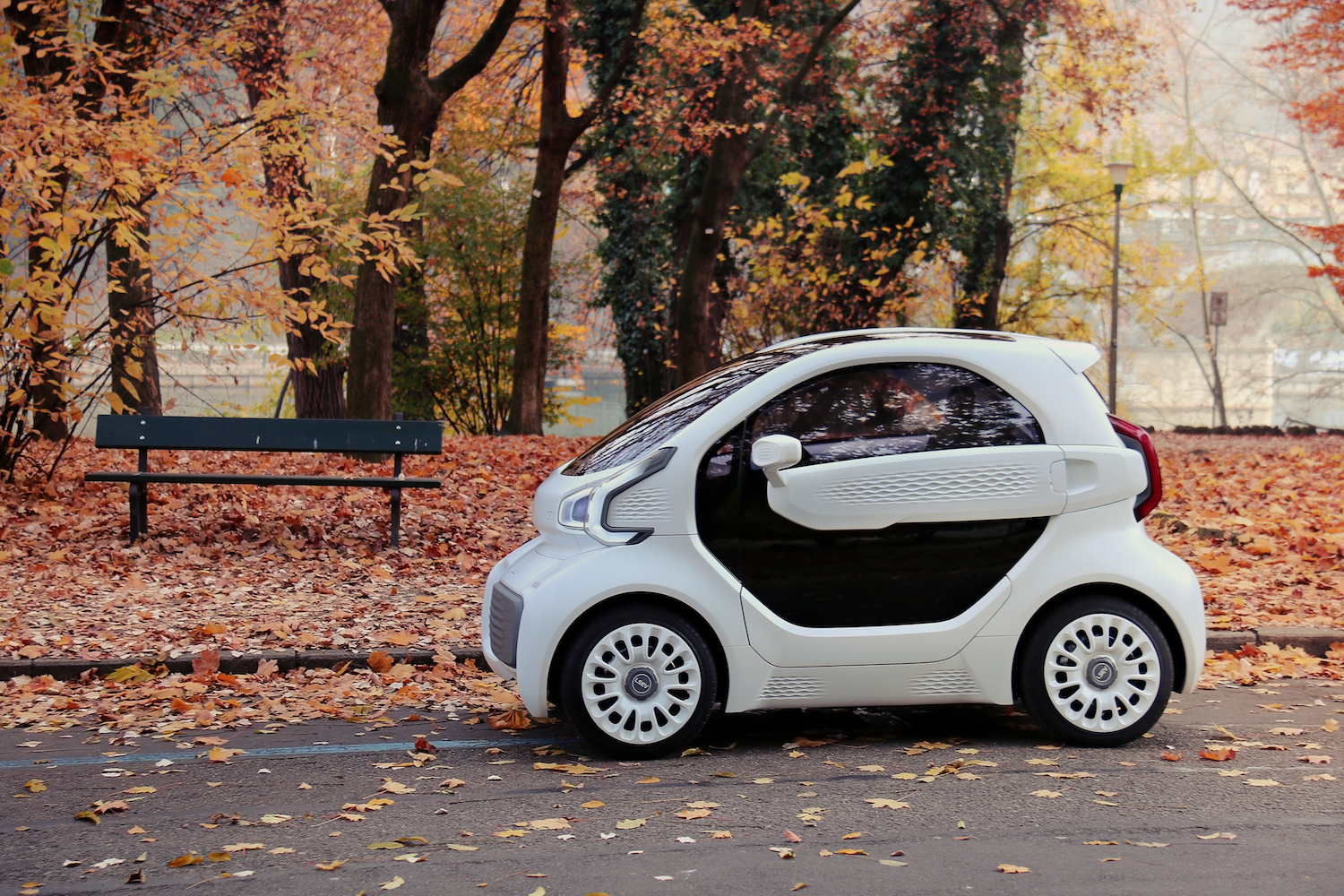
Although this new vehicle attracts much attention, this conference is not just about launching and exhibiting the car. It is more about how 3D printing technology brings revolutionary changes to automotive manufacturing industry. This car, named LSEV, could be the milestone product in the adoption of 3D printing into mainstream production.
“XEV is the first real mass production project using 3D printing. By saying real, I mean there are also lots of other companies using 3D printing for production. But nothing can really compare with XEV in terms of the size, the scale, and the intensity.” Said, Dr. Luo Xiaofan, the co-founder and CEO of Polymaker.
XEV CEO, Stanley said that “after the research and investigation of the global auto market, they decided to design a small electric vehicle that can achieve C2M (Customer-to-Manufacturer) manufacturing which is stated as a main goal of the Industry 4.0 strategy.”
To fulfill this target, it requires mass customization production, fast and cost-effective R&D, and the ability to produce lighter-weight parts that could lead to greater fuel efficiency.
“And then, 3D printing technology becomes the only way to realize it”, said Stanley.
Surely there are many difficulties when utilizing 3D printing technology in auto volume production, Polymaker was chosen as the strategic partner and successfully helped XEV to solve them, not only with material solutions, but also post-processing options in-line with the automotive industry.
“Without Polymaker, we couldn’t make this happen. We really like our interactions with Polymaker, this can be called as know-how combination. Without this kind of interaction, we also couldn’t find the solution we have today. So, we really appreciate what Polymaker do and create for us, we are like brothers, not just strategic partners.” said, Stanley.
Polymaker developed dozens of kinds of engineering plastics for XEV to meet their needs of practical applications. As a result, 3 crucial achievements have been accomplished.
XEV has decreased the plastic parts and number of components in a car from more than 2,000 to 57, and the finished LSEV weighs only 450 kilograms, much lower than similar sized vehicles usually weighing between 1 and 1.2 metric tons.
Apart from the chassis, seats and glass, all the visible parts of the car are made by Polymaker materials through 3D printing. This switch of production leads to more than 70 percent reduction of the investment cost in comparison with a traditional production system.
Conventionally the R&D process of a car model takes about 3-5 years, but it only takes XEV 3-12 months to finish a new design.
Polymaker have also come up with solutions to help with surface treatments and color. These solutions are enormously helpful in customized production and 3D printing volume production.
XEV has already received 7000 orders from Europe even before mass production commences. 5000 orders come from Poste Italiane. And the other 2000 orders come from ARVAL, a vehicle leasing company fully owned by BNP Paribas. XEV plans to start production in the second quarter of 2019.
This strategic partnership between XEV and Polymaker leads to a revolutionary change in automotive manufacturing. It is possible that similar changes, related with 3D printing technology, will happen to every aspect of manufacturing very soon. As Polymaker proves that the 3D printing materials they provide are ready for not only end-use parts but also mass production of finished products.